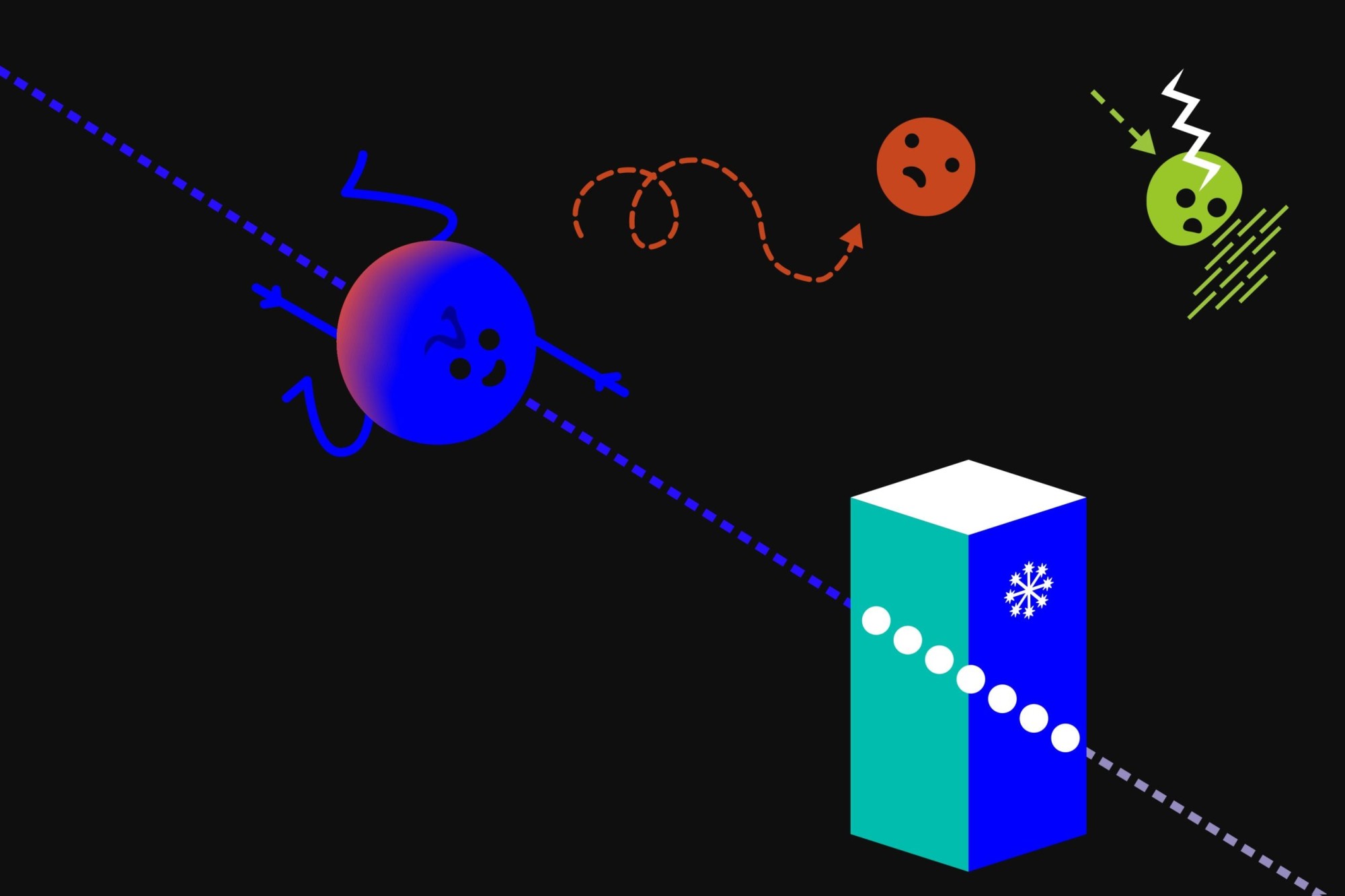
Neutrinos are everywhere, but they do not make themselves known. They pass all the way through the Earth and through our bodies without us noticing.
This year’s physics laureate Francis Halzen realised that ice at the South Pole could be used to track these secretive particles. His vision, first presented in the late 1980s, led to the IceCube Neutrino Observatory, that covers an entire cubic kilometre and was finished in 2011. Researchers soon discovered the first high-energy neutrinos and, a few years later, could publish their discovery of neutrinos that must originate far outside our solar system.
“By detecting these neutrinos, we can learn something about cosmic sources which otherwise would not be accessible to us,” said Mark Pearce, chair of the Nobel Committee for Physics. Listen to him explain